
Work Text:
Depression and suicide will be discussed in this article. If you struggle with either of those, take care as you read this article. Or, don’t read it at all.
Supporting another creator
The sheer amount of creators producing content around Heated Rivalry is astounding. It allows us all to soak up as much of these characters as possible for as long as possible until the next season drops. Heck, I even saw John Green, noted author and YouTuber with his brother Hank Green, a science communicator, interviewed citing how the fandom’s creation around an original idea like Heated Rivalry fascinates him. Yes, the author of “Papertowns”, “The Fault In Our Stars”, and “Everything is Tuberculosis”, specifically mentioned Heated Rivalry and the content creators who’ve come from this series as inspirational. I consider myself a very small voice in that collection of creators. That means John Green knows me! Or, not. Wishful thinking. Actually, I’d love to meet Hank, his brother, as I’m more of a science gal.
Which is where I’d like to mention IlyaSaysItBetter. They have created a series dissecting the Russian language used in the show. They go beyond the subtitles and actually use the lines to interpret better, for us English speakers, the actual dialogue and how they would be delivered and received in Russian. They also tell us if the show used appropriate dialogue current with the times and the ages of the characters. Good stuff there.
They are not a new mention in my works. I reference their translations often. But, they published this piece on Irina some time ago and the steps which might have led her to marry Grigori, someone much older than her: https://archiveofourown.org/works/86803345
This piece explains the conditions in Russia that would have caged Irina into a very tiny box which might have led her to link her life to Grigori; Conditions that very few people outside of Russia would know about or understand.
Would Rachel Reid have known about this upon writing about Irina? I don’t know. If so, most of us would sympathize with Irina’s choice.
Did I use this information to inform my reading of Irina? No. I actually read this article months ago and made a note of it in all of the little places I squirrel away ideas for my articles but haven’t been back to it since then. I only use what the show gives us to read the subtext. If I had thought about Irina’s lot in life based on llyaSayssItBetter’s research and how it influenced her choices I might not have been able to understand her purpose in the show. It would have set me back multiple times and made it harder to discern what I learned in that article versus what I was interpreting on screen. Because once you get to the end of this article, you’ll see how unlike they are.
But, I like supporting other creators who do amazing and detailed work. Because I know I’m not getting paid and they aren’t getting paid - we can all lift each other up to get out work out into the world for people to see what we’re passionate about. Please go check out their article on Irina’s likely beginnings along with their Russian translations. (Embarrassingly, I have to admit that they’re an even better writer than I am and English is my first language. Sigh.)
A short obsession with Irina
As I dredged through the darkness of Ilya’s life discovering Grigori’s and Alexei’s purpose, I kept thinking about the fourth person in their family that was no longer alive: Irina Rozanova. I believed understanding Irina would help confirm my theories about Grigori and Alexei. So, I dedicated quite a bit of mental energy through writing those articles months ago to understanding Irina. Though I know you weren’t worried, I’m happy to report, her purpose reinforces my other subtext finds but also makes me weep for Ilya even harder.
It came to me when I was taking my wife’s dog on a walk one evening. She was still recovering from knee replacement surgery and I love walks. The dog isn’t mine but it works out that if I’m going to go, her dog can too. My best revelations come when my body is moving and I have a quiet mind all of the while surrounded by trees kissing the sky. This moment of discovery impacted me greatly, probably due to perimenopause (That is my scapegoat now for everything odd that is happening to my body and mind that haven’t occurred since this moment in time. I will take no other explanations for it.). My body was so overwhelmed with the discovery that I began to cry. I literally sobbed out loud. That is unlike me. Perimenopause or not, the purpose of her shortened life, at least to the degree that I understand it, was devastating for Ilya beyond just losing his mother at the age of twelve.
Before we go much further you have to understand and we both have to agree that I’m working on air here. There are no lines with Irina. She doesn’t even appear on screen in a memory. I can think of three mentions of Irina in total in the entire show: from Grigori before the gala, from Ilya by the fire and from Shane when he wants to incorporate her memory and name into their future charity work. There is literally only the vibrations in the air (those vibrations are sound waves) and some very well-thought out conclusions on my part to understanding Irina.
And, actually, I’m going to ask you to stop right here. If you have not read my Grigori, Alexei AND Russia articles, this one will not make sense at all. Please stop right now and read those first. They are the trifecta of Ilya’s subtext (besides Svetlana) that helped me tease out the purpose of Irina. I’m not trying to promote my work, I’m just trying to help you follow along with my thought process. While you’re at it, you might as well read the article about Sasha. That is where I talk about allegorical characters, how to spot them and how they are used in film to deliver hidden messages.
Having said that and now with the promise that you have read those other three (uh, [checks notes] make that four) articles, we are agreeing now that I have very little to work with here. But, knowing Ilya and the purpose of Grigori and Alexei as well as Russia highly informed my thought process. I literally thought of nothing else for months from the Heated Rivalry subtext than about Ilya and that constellation of characters.
Ilya’s fireside chat
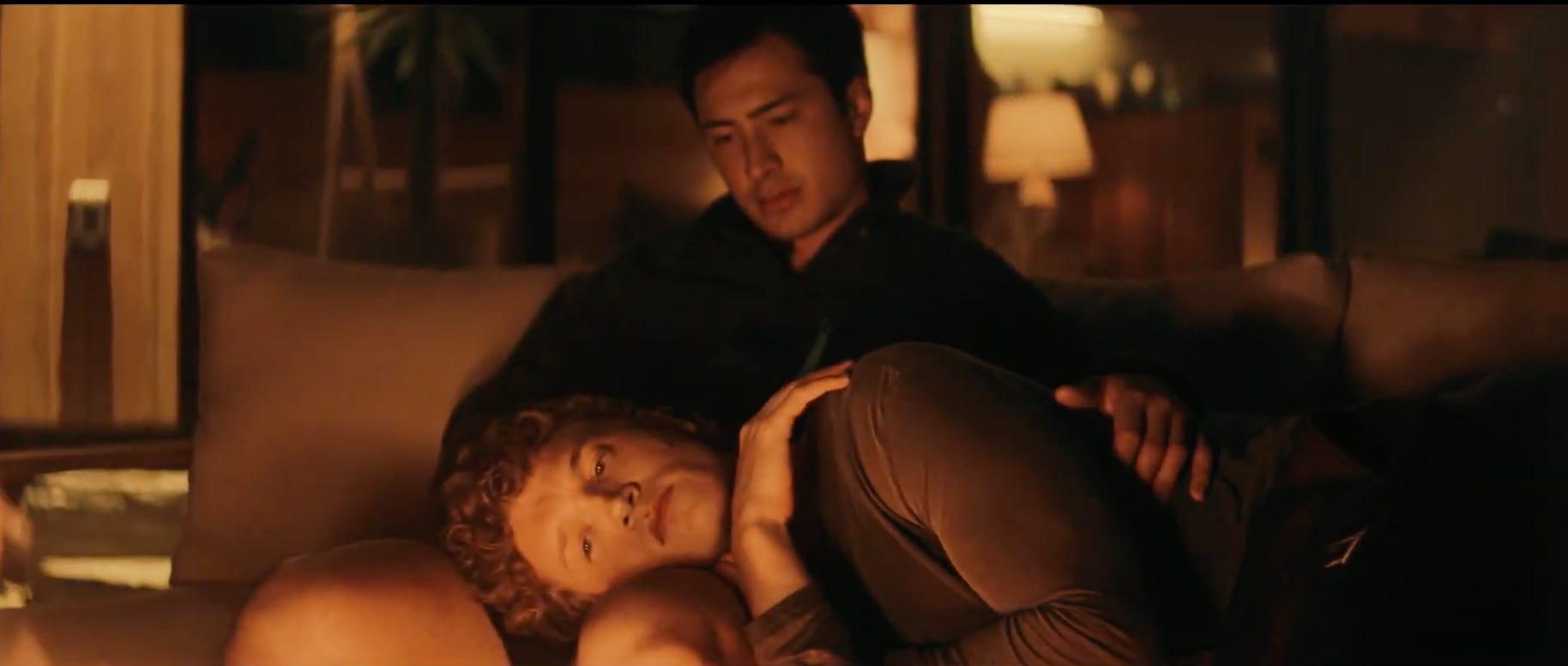
We all know that Ilya found Irina dead at the age of twelve. By the fireside Shane checked in with Ilya to see if Alexei had been in contact with him. Shane’s family is very important to him. If someone in their family died like his father he would want to talk with them. Ilya admitted he had not talked to his brother and it’s probably a good thing he hadn’t.
Alexei represents Ilya’s heteronormative expectations. (Did I catch you not understanding that sentence? If so, go back and read Grigori’s article first, then Alexei’s. I did warn you that you would struggle if you didn’t read them first. But, come on back when you’re done. Irina’s article isn’t going anywhere.) We saw first-hand how Ilya would have lived his life had he chosen the path of marrying a woman. Alexei is not a well-adjusted or kind man and this is Ilya’s fate if he doesn’t pursue Shane and come to terms with his sexuality. I’m sure Ilya, represented by Alexei, loved this hypothetical wife as much as he could but he would never be able to tell his wife or anyone else in his community his whole truth: That he was bisexual. He would be miserable for the rest of his life. There is more to it but that’s the general idea.
Thank goodness Alexei has not reached out to Ilya again. He does not need the unrealistic and destructive pressures of heteronormativity pressing in on him as he shares his time with Shane. Ilya is glad too that those thoughts have not weaseled their way back in either. He’s fully engulfed in this experience with Shane which is very much not heteronormative.
This little exchange accomplished two tasks: it allowed the audience a peek into Ilya’s thoughts, that he was very much on board with whatever this very gay thing is that they are doing and it opened up a chance for Ilya to talk about his mother.
Shane says “I’m sorry about your family. Even if they suck, you must miss them.” In other words, you no longer have these negative ideas pressing in on you (Grigori died so Ilya is no longer plagued with destructive internalized homophobia thoughts. He is also no longer beholden to acting a certain way as a man because he kicked Alexei out of his life.) but sometimes those thoughts are comfortable. Ilya grew up with these thoughts and now his new life is messy and untethered to any one way of living. He can forge his new path. Shane is saying “Those old thoughts suck but they were familiar and easy in a heteronormative society.”
Ilya admits that the one person in his life that didn’t suck was his mother.
Ilya - My mother didn’t suck. She was great.
Shane - How did she die?
Ilya - By accident. She accidently swallowed a whole bottle of pills.
Shane - How old were you?
Ilya - Twelve….I found her…….I don’t want you to think she was weak.
Shane - I don’t.
Ilya - She was so funny and beautiful. She was so sad. And, my dad was so hard on her… and … (loon call).
(I’m not crying. You’re crying but I’m not. Here’s some tissue through your screen. You’re welcome. Sniff)
When we look at characters surrounding main protagonists, we have to look for little clues that indicate some sort of shared characteristics if subtext digging is our pursuit. These characters mirror onto our main protagonist some story or idea of the main character, in this case, Ilya. And, this is basically all I think about and write about: What can the other characters in a story tell us about the main protagonist. If you’re here reading this article, possibly this has taken over your life too. In this moment by the fire, there is something about Irina that will tell us a story about Ilya that isn’t told in the text even if she never graced the screen.
When Ilya says “She was so funny and beautiful,” we can all agree that these are familial traits passed down from one generation to another. Ilya IS funny and Connor Storrie as Ilya IS beautiful. Ilya got those traits from his mom. These are little clues to us that Ilya is also talking about himself. In that same line of thinking, we can assume that her looks and humor along with her implied depression (“She was so sad”) were also passed down to Ilya too.
So, Grigori was impatient and unkind to Irina about her sadness. Depression is not something you can choose away. There are actions we can take in our life to mitigate some of the worst symptoms but depression isn’t something that automatically goes away because we do those things. We still don’t really know what causes depression and to treat someone else as if they have the choice to make it go away and still choose to have it or treat them poorly because they have depression is just cruel.
One story told here about Ilya through Irina is that Ilya too has depression. He may also suffer from suicidal ideations. Does anyone remember in episode 1 how Shane guided Ilya away from the balcony edge of that very tall building? Shane even joked that losing this Rookie of the Year (Most Heterosexual Hockey Player of the Year*) Award wasn’t something to jump over implying he thinks Ilya would jump over the edge of the building to his death. (*That reference is in the Russia article).
If you’re familiar with “The Long Game” by Rachel Reid then you know that idea is central to Ilya’s struggle in the sequel to their story in “Heated Rivalry”.
Imagine how disappointing Ilya must feel about himself knowing of his likely depression and how Grigori would have responded. His father would probably be just as harsh and unkind to Ilya as Grigori was to his wife. That’s one more thing we would have never told his father. Before Grigori’s death, Ilya would have tucked that sadness away along with his bisexuality in a very cluttered closet. One less disappointing thing to be from his father’s perspective.
He was first-hand witness to how destructive Grigori’s impact could be on a depressed person. Her fate seems a plausible end to his own life if he ever let it slip that he had depression too. He couldn’t reveal that to his father and maybe not even to himself. What a horrible reality to face and daily battle to fight especially since he was the one who found his mother.
Internalized homophobia kills
But, the story doesn’t end there. We can pull more out of those lines. The specific mention of Grigori here tells us everything we need to know about Irina’s true purpose. If Grigori was Ilya’s internalized homophobia, Grigori created a very narrow expectation of how Ilya could act as he grew up.
Our patriarchal society dictates what we deem as the right ways to act and the wrong ways to act as women and men even going back into our childhood as girls and boys. Boys aren’t allowed to cry because that would make them weak like a girl. Because crying is weak.(?!) Boys can’t touch other boys as they grow older like holding hands or hugging. Though these acts are encouraged for girls. Physical interaction between boys soon turns into fake fighting and jostling each other around. The softness of hugs and gentle touches aren’t allowed in patriarchal societies for boys. The only allowed touch is rough and unyielding that establishes dominance.
But, the rules don’t stop there. Boys can’t wear bright colors, paint their nails, wear dresses, have long hair lest they be misgendered. They can’t dance, sing, or be creative in ways that girls are allowed to. They see their fathers and male figures in their life void of emotion like joy, sadness, or whimsy and they begin to lack empathy. In order to grow into a man the way men should be, boys are stripped of their personalities to a point where they have very little feelings left and very little personalities remaining either. They build a wall around themselves brick by brick starting younger than they are probably aware.
Boys also correct other boys’ behavior. In order to feel manly enough, boys will bully other boys into behaving more and more like a shell of their former selves. They become stoic, lose friendships and, eventually, community. In order to be seen as not a girl, the boys must all police each other into following the rules, becoming more like each other and competing for who is the manliest.
The boys train, at a young age, into puberty to become this standard manly man. Every man must fit into a certain box or they will be perceived as effeminate or not completely straight. In other words, to be considered a straight man, the only kind of true man, a man must strip away almost everything about themselves that they once were as a boy.
In order to satisfy Grigori’s demands, Ilya couldn’t act outside of that very strict standard of a man or he would be perceived as too feminine which would mean he was gay. Grigori, his internalized homophobia, would not approve or allow that.
Homophobia can be traced back to misogyny. To act a certain way as a man would give the appearance of acting like a woman. And, that’s not acceptable for men. (Please read through these lines a whole heap of eye-rolling and sarcasm from yours truly, Definitely Still an Amateur.)
When does this usually happen in boys? Very young indeed but when do they become acutely aware of this new reality? When would this be one of the earliest moments in their lives that this is their new reality? That there is no turning back. They can no longer act like who they are and have to perform within this strict definition? I’m sure it hits differently for each boy but I bet that happened for Ilya when he was twelve.
Yeah. When Irina died.
Ilya said “My dad was so hard on her.” We know that Grigori is an awful man. Ilya can never win. Anything Ilya does good, bad or neutral will be picked apart by his father. It’s an impossible task to please his father. From this line, we can guess that Grigori was just as awful to Ilya’s mother as he was to Ilya. His constant belittling only contributed to Irina’s feeling of isolation and, likely, deepened her depression. How much longer would Ilya have before he too succumbed to Grigori’s daily onslaught of criticism?
We know Grigori is not really his father though. Ilya could never please Grigori because it’s hard to be attracted to men when you are also battling with internalized homophobia. Ilya can sleep with any woman he wants to but any thoughts of attraction to men is not acceptable. Any deviation in how a white, straight, cisgendered, male hockey player should act would be considered gay and being any sort of gay, even if not 100%, will not do.
Why would his internalized homophobia need to be so hard on Ilya’s mom? Well, Irina is not really his mother in this level of the subtext. She represents something in Ilya that died at 12 and that Grigori treated so harshly that it might have led the idea of her to swallowing a whole bottle of pills.
What would internalized homophobia need to treat harshly during Ilya’s childhood leading up to the age of twelve? His innocence, his joy, his softness, his kindness, his personality, his femininity, anything that didn’t make him look like a straight man. Ilya lost his freedom to live how he felt most comfortable. He had to conform to toxic masculinity in order to walk through the world to be perceived as straight. That’s why he was so upset about not winning the Rookie of the Year (Most Heteronormative Presenting Hockey Player) Award. If Ilya lost the award, he wasn’t doing a good enough job at presenting as straight. Toxic masculinity in a patriarchal society is so limiting and debilitating.
Irina is Ilya’s innocence and queerness at a young age and the joy and freedom he felt living within that framework. As he grew, the world became harsher. Those specific societal expectations that he cannot be effeminate, soft, kind, passionate, joyful or queer reflect in Irina’s slow decline. She started to become more and more depressed as Ilya felt the increasing pressure to conform. In other words, Ilya started to oppress more and more of himself because of homophobia. And at one point in his life, at twelve specifically, he swallowed so much homophobia that he actually killed his innocence and the acceptance of those qualities that didn’t fit the patriarchal expectation. He locked away the joy that came from living his true self.
This line can’t be forgotten: “I don’t want you to think she was weak.” He implies that Shane might think she was ‘weak’ because she took her own life when life became unbearable. Think about a young Ilya fighting daily to keep toxic masculinity and internalized homophobia at bay. Each day he grows older those outside forces creep in to eat away at his true self. One day, when not much of him was left, he lost his struggle and finally snuffed out the last remaining bits of joy, laughter and warmth that filled his life before.
He wasn’t weak. That part of him died by a thousand cuts. Just like Irina. She suffered from depression and a bad case of a neglectful and harmful husband. Every day a little bit more of her died inside until she couldn’t take it anymore.
(Would you like another tissue? I’m all out. I passed too many out to you all. I’m sorry.)
Don’t believe this sort of struggle occurs in real life? Matthew Kenny just posted this about his story. He actually used the word I have woven through this article. He had a secret and “killed” the feelings he had for another boy as a young hockey player and hid in the closet for 25 years. His story, now set to be released in a book, began to unfold for the world after he watched Heated Rivalry in December of 2025 and posted about his five-day panic attack. The pinned post on his Instagram account recounts his first experience with a boy as a hockey player and how he buried his first love with another boy in his mind and heart because of toxic masculinity.
This vulnerable post in particular from Matt went viral, catapulting him into the zeitgeist. I remember reading it as it came across my feed organically and just being astounded already at the impact of Heated Rivalry. Somehow it came to me without being reposted from another site. I don’t follow any hockey players or sports personalities in general. But, I do follow many queer creators and I was consuming Heated Rivalry posts at that time. It wasn’t too much of a leap for my algorithm to feed me that story.
I’m just proud of Ilya for sharing his story with Shane. That was not easy for him to do. How many people get close enough to Ilya to let him share that part of his life? Not many, I’m sure.
Does Shane know what Irina means in the subtext? Probably not. The subtext is for us, the audience, to find. But, he can tell from the seriousness of Ilya’s responses that her death impacted his childhood immensely, and, therefore, his life as an adult too. Shane couldn’t imagine a world without his mother. Shane would never be able to fix that but Ilya’s admission affected him more than either of them know at this point.
The Irina Foundation
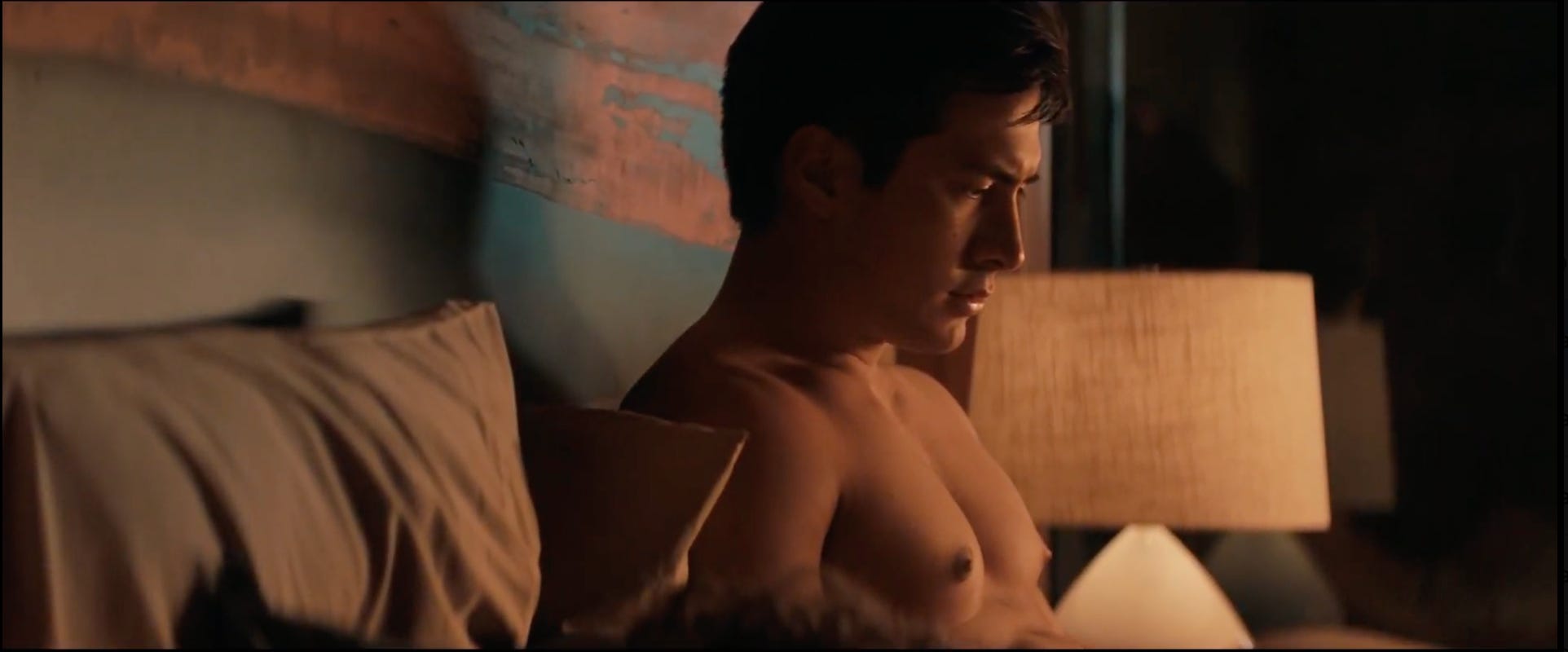
In the romantic haze that is the cottage, after Shane realizes Ilya and him are actually on a path of a future together, Shane comes up with the idea to start a charity so their later close proximity will go unnoticed. They could appear as just two guys working on their charity if they were seen out in town or, even, appear as friends a few years after the charity started. They would determine a length of time deemed long enough to the public to allow them to forge a friendship that has surpassed their rivalry and, then, make public appearances. Shane planned a slow con.

What Ilya didn’t bargain for was just how fast Shane wanted a solution. He already asked Ilya not to marry Svetlana. Shane was locked in to figuring this problem out. From Shane’s perspective their future together can’t wait any longer. This is when Ilya realizes just how serious Shane is about Ilya. The tides have turned. With that realization, Ilya confesses his love for Shane which is then reciprocated by Shane.
A scene or two later, after a pivotal and intense sex scene in their relationship, they doze together. Shane thinks, considering how vulnerable they were together during sex and with a shaky, but agreed upon, plan for their future, that maybe he can ask about Ilya’s mother again. I think Shane recognized something in Ilya that was still holding Ilya back. While he has rid himself of certain harmful thoughts and expectations, between the time his father dies and the discussion of their future together, Shane senses something missing in Ilya.
Ilya SHOULD be happy and content. They just confessed their love for each other. They have a tentative plan to be together moving forward. But, he still looks so lost.
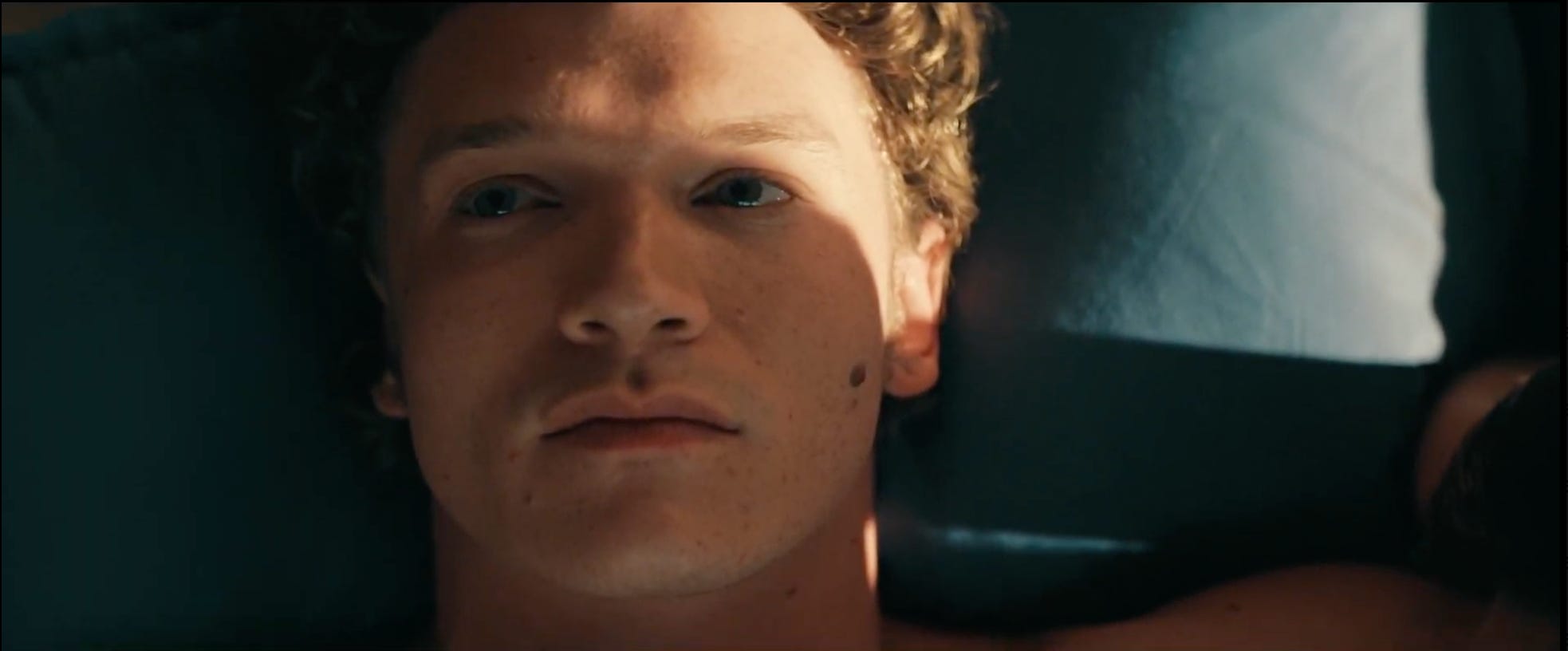
Shane has this idea to honor Ilya’s mother, which Ilya reveals her name to be Irina, by raising money for mental health organizations that support suicide prevention. They would raise money by hosting hockey camps for kids in the summer.
So, if Irina represented Ilya’s childhood joy and his true self before Grigori (internalized homophobia) slowly and meticulously obliterated all of the softness from Ilya, Shane opened the opportunity for Ilya to regain some of that tenderness back. Shane gave Ilya permission, or opportunity, not actually releasing some sort of power over him, for Ilya to explore who he was before he killed what couldn’t fit into the specific role of masculinity.
Because, let’s be brutally honest for a minute. Irina taking those pills was a way for her to escape her crippling depression. She died because of that choice as she intended. That act was self-inflicted.
Ilya did the same thing to himself. He intentionally killed the part of him that didn’t quite fit the standard set by toxic masculinity. That act was self-inflicted. Though, there is such a thing as murder by suicide. And, I think this is an apt phrase for them both. Someone or something was so consistently harsh and cruel to an already vulnerable person that their only way out of their situation, they believed, was suicide.
Ilya’s whole demeanor changed after Shane’s suggestion. Shane allowing (again, not a control thing but more of an encouraging partner) Ilya to remember who he was and being to to regain those parts of himself back before they died is one of the greatest gifts Shane could give Ilya. No one in his life has permitted him to fall in love with himself again, or knew him well enough to even know that that was something that he needed.
How else can Ilya respond other than to say to Shane “She would have loved you like I love you.”
Any parent whose child brings home their partner and that partner is nothing but loving, patient, accepting, and encouraging, as well as intensely skilled and driven to success at their highly paid profession, would love that partner. They’d be an idiot not to.
Now, Ilya has a partner who is not only willing to let him explore this softer side of himself, the side that died long ago, his partner is actively encouraging Ilya to do that with Shane. Shane wants to be a part of Ilya rediscovering himself through their work together with the Irina Foundation.
Ilya admits here that even as a young boy, he would have loved Shane like he does today. Shane’s presence in his life brings him peace, comfort, safety and joy. I wonder if he had met and fallen in love with Shane at that early age, would he have gone through what he did with his father and brother. Would his mother have died? Something to ponder…
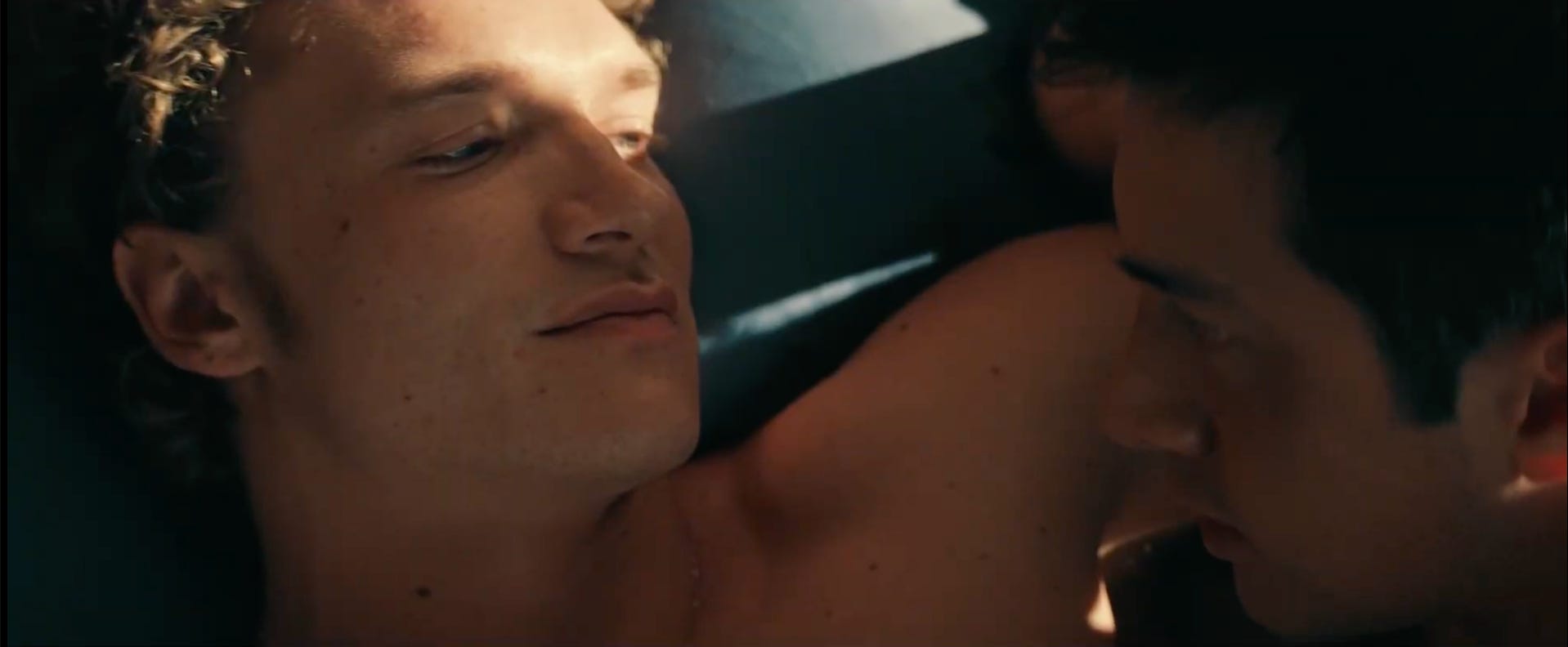
Бабуля (Grandmother)
Let’s think a little bit more about this foundation. How do they land on raising the money for the organization? They will run hockey camps for kids. So, in Shane’s plan for their future, to partner in the Irina Foundation together, Ilya will get reacquainted with himself at the same time as they are working with children. Ilya can find his childhood innocence again while positively and directly impacting children in their community as a mentor.
While these aren’t their actual children, either genetically, surrogacy or by adoption, Ilya and Shane get to be stand-in fathers to these children for the duration of the camp. Ilya can fulfill a fantasy of his that he may have never known or considered before: To introduce his children to his mother.
She died too young for him to have been able to experience her as a grandmother or even considered that one day she might be a grandmother to his children. Now he can to some degree. This organization would give her the opportunity to be a grandmother of his temporary children every summer.
Shane’s dedication to their future, creating this organization named after Irina, made those two realities a possibility for Ilya. Can we all give Shane a standing ovation?!
Grigori’s mistake
When Ilya meets with his father before the gala, he’s treated unkindly. Ilya’s Russian team at the Olympics just lost to Latvia. Ilya knows to tread lightly around his father because of that loss. Ilya’s caution doesn’t seem to matter though as Grigori berates him for the loss anyway. No matter Ilya’s response or actions, he never gets it right. Grigori seems to always find a way to pick at Ilya and twist Ilya’s words and actions to belittle him.
One of those things is Ilya’s perfectly tied bowtie. My wife fancies a bowtie every once in a while. She has a few that are real bowties, not the hooked kind. Most of hers are hooked though. Bowties are hard to get right. But, Ilya’s was perfect.
Let’s remember though that Grigori represents Ilya’s internalized homophobia. No matter how Ilya acts, he doesn’t act straight enough. In Grigori’s shriveled and outdated perspective, not having a perfect bowtie indicates weakness which then implies something other than the perfect version of a man.
But, as Grigori attempts to fix Ilya’s bowtie we see him slip for the second time into a very confused state. First he forgot the name of the country that beat Russia’s team, Latvia. Then Grigori completely forgot that Irina was dead. He blamed Irina for poorly tying Ilya’s bowtie. Irina might have only ever tied Ilya’s bowtie once or twice in his life before her death. How often do twelve-year-olds wear bowties? Ilya had to gently remind Grigori that Irina was dead and that Grigori had a new wife, Polina.
If Irina represents Ilya’s freedom and joy of boyhood lost to toxic masculinity, Grigori forgets that she is gone. I had proposed the idea that Grigori’s dementia represented Ilya’s shame for having romantic feelings for Shane. When Grigori died, his internalized homophobia went away, so did the shame for loving Shane. It died along with Grigori.
Daddio forgot that he and Ilya together killed that freedom and joy of boyhood at Ilya’s twelve years of age. Ilya had to remind daddy that she was gone. Because Ilya has started to fall in love with Shane, Grigori’s dementia was fighting to take hold. His dementia is both the recognition of his love for Shane and the desire to stop those feelings in their tracks. The problem is that the dementia only gets worse throughout the series along with his growing love and irksome guilt of that love for Shane. Through the fogginess that is dementia, at the moment Grigori brings up Irina, it’s as if Ilya’s love for Shane harkens back to the carefree life Ilya remembers before he had to conform to society’s accepted and constricted version of a man.
He remembers having romantic feelings towards boys, not just physical attraction. Shane has awakened those feelings again in Ilya that he killed at twelve. Shane’s presence in his life made him feel whole again and able to reconnect with feelings he hadn’t experienced for years. Not just romantic feelings for another man, but the possibility of living his life a different way. Shane has a lot of power and doesn’t even know it.
What about Polina?
If I was working on air and vibrations to determine what Irina meant for Ilya, then figuring out Polina was like working in a vacuum. There are but three scant lines that mention her name and one that is only a reference to her that I must draw my conclusions from. And, I’m going to be honest, Polina’s purpose took some deep and serious thought. Her purpose did not rush into my head unrestrained as intensely as Irina’s purpose did. She definitely warranted gentle teasing from the text as I sat down to write this article.
Sometimes with obscure characters it helps to look at the origin of the name to see if that can tell us anything about who they are. Do I recall correctly that Polina was named in the film series but not in the books? If so, then Tierney named her and he probably did so with intention. The name ‘Polina’ mirrors ‘Irina’ in that the last four letters of each are the same. That’s our first clue to consider for Polina.
Irina’s name comes from a Greek goddess who personified peace. Irene of Macedonia was the first woman recognized by the Catholic Church as a great martyr. (Thank you Wikipedia.) Ried named Iya’s mom and I think it fits her well.
In this source the name Polina is thought to come from the name Apollinarios which is derived from the Greek god Apollo. Apollo is the “god of music, truth, prophecy, healing, the sun, and light”. This site also states that the name could be linked with the Greek “Apollōn, potentially connected to the verb apollymi, meaning “to destroy” or “to perish”.” Other sites list the name to mean “humble” or “small”.
Looking at names and their origins can be a little like reading tea leaves. Tierney picked that name but maybe his best friend’s name is Polina and using her name for this character gave him the opportunity to honor her. Maybe there is no connection between her name and her purpose.
Let’s come back to Polina’s name again when we know more about her because her name’s meaning from the various sites are too different to find a consistent theme. One could read her name to mean healing, to perish, humble or many of the other things listed above if we assume Tierney did pick her name due to its meaning.
In that above scene where Grigori mentions Irina in the present tense, Grigori has to cover over his misstep after Ilya reminds him that mom is dead. Here is the dialogue:
(Thank you again for your translation work Ilyasaysitbetter. They can be found on Substack and Tumblr under that name.)
Grigori - Who tied this for you? Your mother? She doesn’t know how to do this properly.
Ilya - No Father. Mom is dead. Do you not remember?
Grigori - I meant to say, your stepmother.
Ilya - And, where is Polina? In Moscow?
Grigori - Of course.
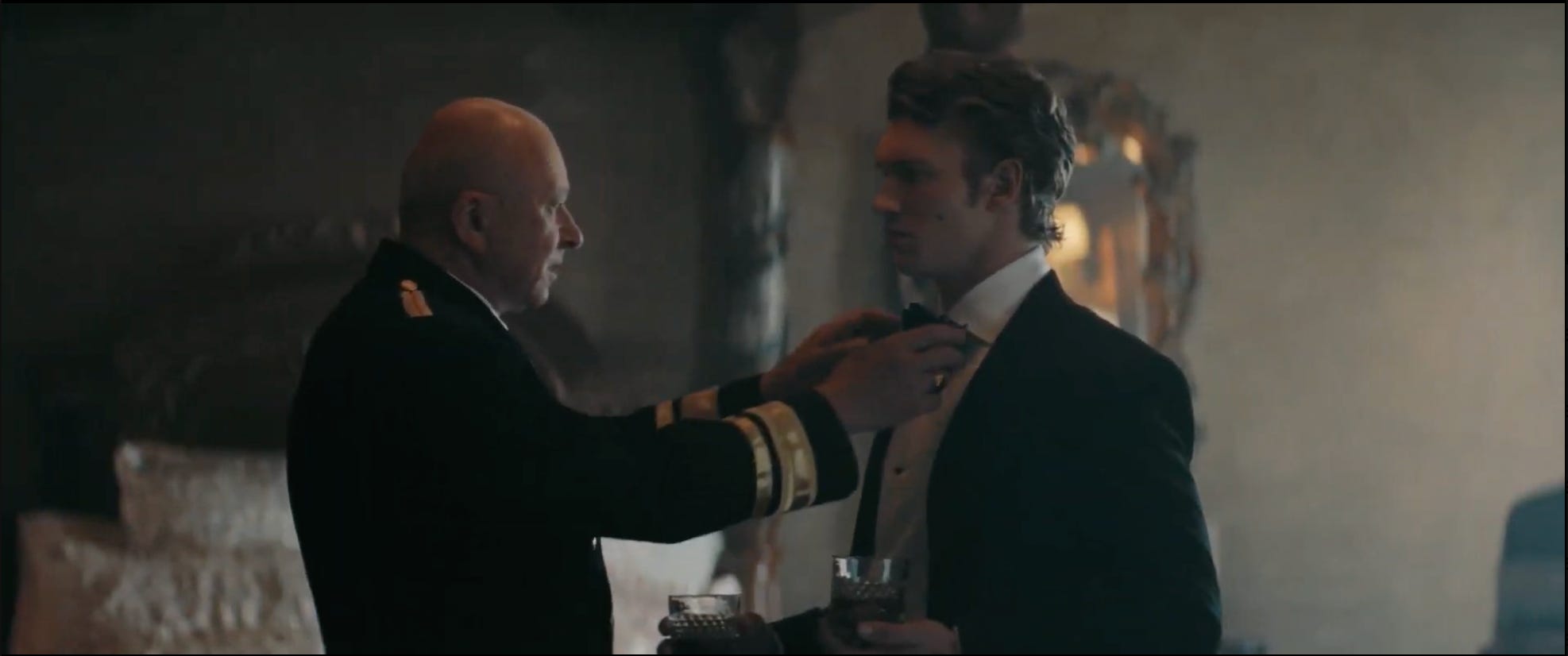
And, later during the Tuna Melt scene in Episode 4. Grigori calls Ilya during this moment where Ilya bids to take up more space and time in Shane’s life than had been the standard. Though Shane doesn’t catch Ilya’s purpose until first names are breathed during an intensely intimate moment.
Ilya - Are you alone? Is Polina there?
Ilya - Polina, she is your wife.
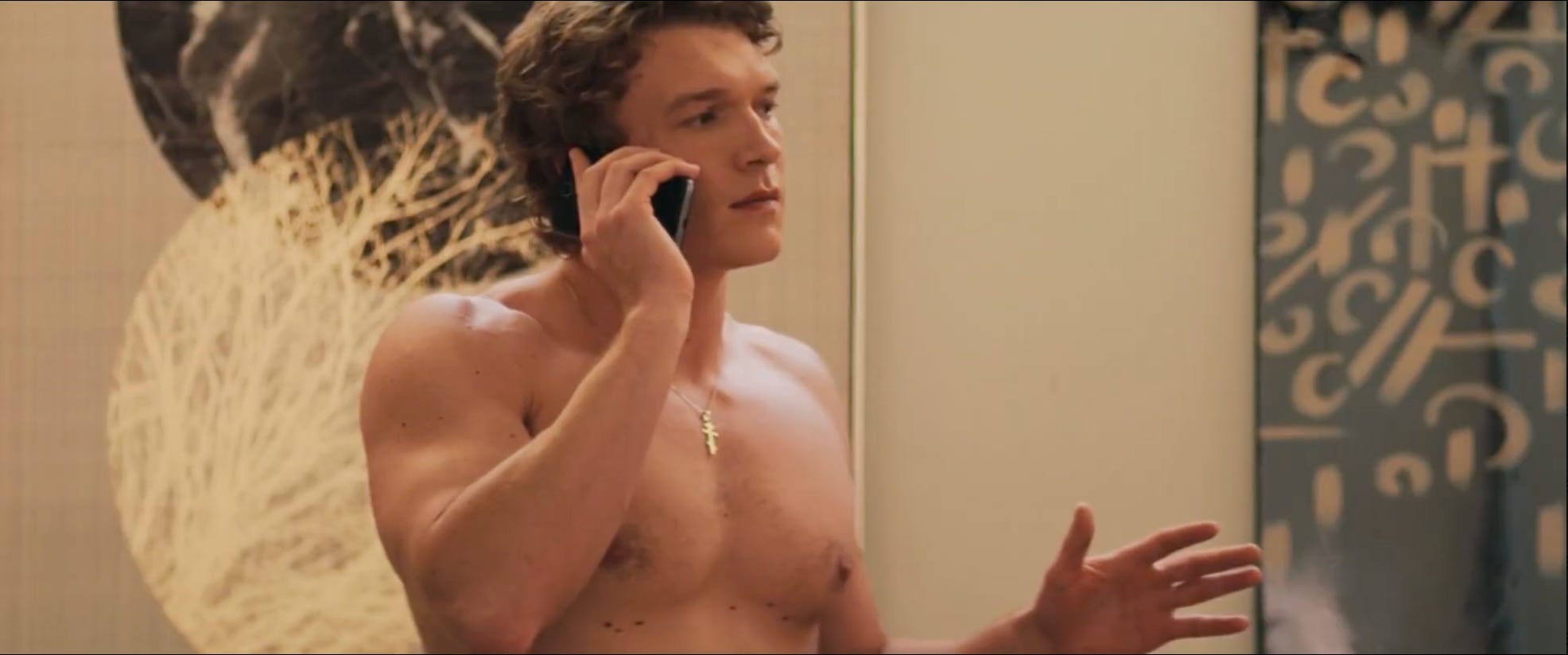
Since we do not hear the other side of the phone call, we can only assume that Grigori is not well. Ilya’s immediate agitation and responses indicate that Grigori doesn’t seem to understand his basic reality. Ilya is looking for other adults in Grigori’s life who should be with him to help care for him in his confused state considering they don’t live on the same continent. Can we assume that he has deteriorated to such a degree that he should not be left alone at all?
As mentioned before Grigori is Ilya’s internalized homophobia. So, as Ilya invites this man, Shane, over for sexy time, a nap, lunch and a hockey game, much more than they’ve ever spent time doing before, Ilya’s thoughts start to spiral out of control. His internalized homophobia calls him to remind him that he shouldn’t be doing this. Well, I think the shame of his love for Shane makes the call actually. He knows he shouldn’t have these feelings or want this relationship at all. But, here is Shane… in his house...invading his every sense.
So, Ilya brings up Polina by name for the second time. Not Grigori. Ilya has to remind Grigori this second wife exists. Let’s see what we can learn about Polina knowing who Grigori and Irina are and what they represent for Ilya.
We have the mean dad representing internalized homophobia and a beautiful, funny, and smart mom who represents Ilya’s childhood freedom and joy lost to homophobia’s (Grigori’s) punishing expectations. They were married while Irina was alive.
If Irina was one of Grigori’s wives, and Polina came after Irina’s death, she must mean something very similar to Irina’s purpose to Grigori. They take almost the same role in Grigori’s life, though very different roles in Ilya’s. From Ilya’s perspective one is the mother who raised him and loved him while the other is only similar in name, stepmother.
Now before we get too far, I want to make sure everyone is crystal clear about my view of stepparents. I have no thoughts on them towards the negative or positive. They are another adult in a child’s life who should be nurturing and caring. Depending on the family’s decision together, they may take an active role in parenting, making decisions for the child like a birth parent might or they may take a less active role like an aunt or uncle might. It is up to each individual family to decide how that new parent fits into a child’s life.
Maybe less impactful, a stepparent acquired as an adult child would be seen more as just a parent’s new spouse and less of a new and active parent who has influence in the adult child’s life. In this case, an adult child does not depend on the stepparent to make meaningful decisions that would affect them on a daily basis.
The narrative in the media often paints a broad and negative stereotype of stepparents. And, dear reader, if you had/have negative experiences with stepparents, those narratives are only reinforced by this common trope. But, there are lovely, real-life stories about stepparents who only positively impact a child’s life for the better. The more loving and kind adults responsible for a child’s well-being the better the outcomes for that child. So, I caution you if you have had terrible experiences with stepparents that you not necessarily assume that is the case for Ilya. We have to look at the text and subtext to make the decision about her impact on Ilya’s life.
We can’t make any direct conclusions about the impact Polina has on Ilya’s life because the relationship is never discussed. But, could we make some guesses about her role in his life from the dialogue? I think so. Could we also look at her subtextual purpose to make some assumptions about their relationship with that new information? Also, yes.
Let’s first take a look at how the show mentions Polina. Surprisingly, she is more developed in the book than the show. If I remember correctly, in the book, Ilya comments that after Grigori’s passing she worries to Ilya about money. There doesn’t seem to be any other than Ilya’s. This was one character that Tierney actually made less important in the text for the show than in the book. That doesn’t mean she’s less important in the subtext though.
In the show, she is never around when she is needed and is even forgettable from Grigori’s perspective. Ilya has to remind Grigori that she exists and even has to define her role to Grigori. She is regarded as ‘stepmother’ by Grigori in episode 2 and ‘wife’ by Ilya in episode 4. By using ‘stepmother’ to Ilya, Grigori seems to inflate her role in Ilya’s life compared to Ilya who chooses ‘wife’ not ‘stepmother’ to say to Grigori. So, it seems like when Grigori remembers Polina, he wants her to be a mother to Ilya not just Grigori’s wife.
We don’t know when Grigori married Polina or how old Ilya was at the time. But, the way Ilya talks of her (or doesn’t) and how she doesn’t show up in his life, makes me think this marriage happened at a point in Ilya’s life when he didn’t need another adult to help raise him. Or, that she never took an interest in raising him regardless of his age.
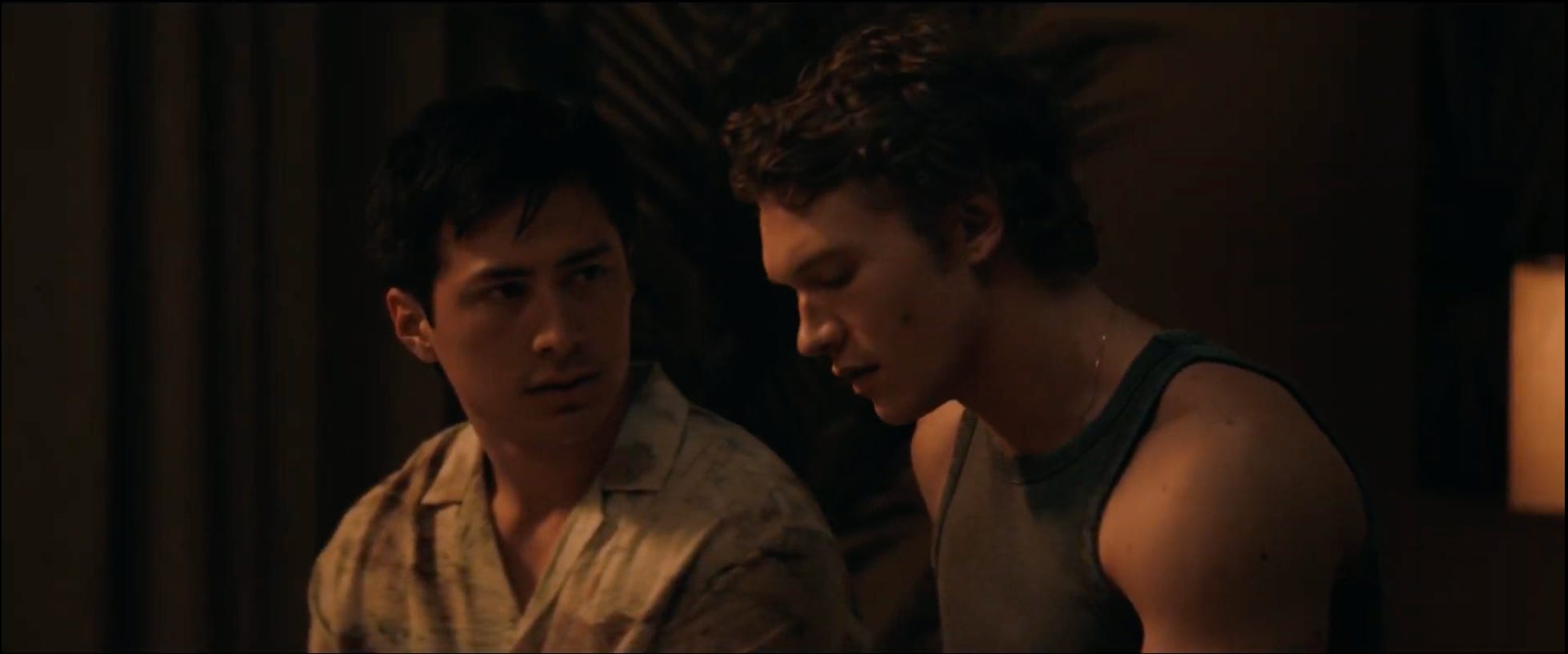
Polina doesn’t take on a nurturing parental role for Ilya due to her notable absences in significant moments of his life. She isn’t even mentioned to Shane when he asks Ilya about his family during the All-Star weekend. He only mentions his dad, brother and dead mother.
That’s all textual details that we have in order for us to dig into the subtext. Right now, I’m firmly in the “I don’t like Polina but I need more evidence to back that up” camp.
I started with this many paragraphs ago and it’s important to come back to it. We have the mean dad representing internalized homophobia and a beautiful, funny, and smart mom who represents Ilya’s childhood freedom and joy lost to homophobia’s (Grigori’s) punishing expectations. They were married while Irina was alive.
Polina filled the wife slot for Grigori after Irina died. If Grigori represents Ilya’s internalized homophobia and Irina, his childhood freedom and joy to be his true self, took her life because of the pressures of homophobia, then Polina filled that hole that was part of Ilya’s life. Grigori did not act alone in driving Irina to suicide. Ilya allowed Grigori in. He reluctantly allowed those pressures to slowly kill his childhood joy until its last breath at the age of twelve. They created together Polina’s role in Ilya’s life.
I believe Polina represents the version of manhood that Ilya created to replace his childhood joy. She is absent, unremarkable, and forgettable. She is the shell of a man that Ilya became after the death of his childhood. So, here is Grigori giving her an inflated role in Ilya’s life by calling her ‘stepmother’ when, in reality, Ilya wants nothing to do with her. He is not invested in the man he became without the version of the joy and freedom living his true self that he experienced in his childhood. He doesn’t want to be this new version of himself even if Grigori is perfectly happy replacing Irina with Polina or Ilya’s early life filled with joy with this empty husk of a man.
And, she’s never around when others need her. This reads that Ilya can’t show up to his life fully when he is needed by others. In the Tuna Melt scene specifically, the mention of Polina sharply reminds us that Ilya is not showing up fully for Shane here. If he was, Grigoria and Alexei would not have interrupted their moment. He still only feels comfortable showing Shane the toxic husk he became after the death of his childhood freedom and joy. This isn’t fair to Shane.
While Shane ran away fast from that encounter, his actions set them up later to show up for each other more fully during the All-Star weekend. Ilya mentioned his mother and the fact that she was dead. He was able to painfully confess to Shane “This part of me was killed long ago and I can’t access that part anymore.” Shane was able to hold him through that pain. Ilya was quite torn up by the fact that his mother died long ago when he was young. Which also meant, in the subtext, that he lost something he hasn’t been able to gain back for a very long time and that too deeply saddens him.
As Ilya’s stepmother, Polina is a fairly absent adult in his life. She does not take responsibility or interest for his well-being and doesn’t seem to be a present wife for Grigori. Her stepmother status isn’t winning her any awards. As Ilya’s creation, the man he is now, she’s pretty shitty actually.
When Ilya asks if Polina is in Moscow in episode 2, that is another part of Russia. Ilya struggles when he is in Russia. In Ilya’s life, Russia is the metaphorical place in Ilya’s head that he goes to when he’s feeling quite down. This is the depressive state in his mind he can’t seem to get out of and where he lets those intrusive thoughts get the better of him: Alexei (heteronormative expectations) is there, Grigori (internalized homophobia) is there, and sometimes Sasha (horrible childhood memories) is there too.
So, if Polina is in Moscow, this is just Ilya finding another awful place to go to in his head. We can also assume that Ilya does not show up fully as himself here either just because of the mention of her name. Though, we didn’t need her name dropped to understand how hollow Ilya feels here. Even in his own head, he can’t fully embrace himself. He’s even convinced himself that he is something he is not.
But, Ilya created this cage for himself and he has to find a way out. Thankfully he does find a way out through Shane. As Shane creates the Irina Foundation, Ilya can regain some of that joy and freedom he once had. He can find himself again with Shane. Which is why Ilya falls even more deeply in love with Shane. To have that magic back with the help of your lover? To rediscover who you once were without ridicule or shame regarding why you lost touch with that previous life or created a new one to protect yourself? That’s gold! Cash in!
If we circle back to Polina’s name origin, I said looking at name origins is like reading tea leaves. I mean most of what I do is reading tea leaves but considering we now know Polina represents the shell of man Ilya created after the death of his childhood freedom and joy, the meaning “to perish” or “to destroy”associated with her name fits. Parts of Ilya had to be destroyed and perished in order for Polina to replace them.
So, about that lecture on stepparents. Yikes. She isn’t the best but she’s also not really his stepparent. He’s actually telling us that he’s not that great as a man now that Polina is part of it. He needs Irina back in his life to find his true self.
The end
Did I cry a couple times writing this article, yes. It is fundamentally difficult for me to understand how someone could erase parts of themselves to fit in. I’m definitely the black sheep in my family despite my relative’s insistence I conform. I didn’t and still don’t want to fit into the rigid design of what a woman has to be in a patriarchal society. My queerness confuses people but I’ve never let it deter me from being who I am. Their confusion is not my problem to solve.
Did I have to be in the closet at some point in my life for my safety and well-being and to protect my partner? Yes. But, I was always honest with myself about who I was and the conditions that put me there. I never tried to bury my queerness from myself or the people in my life who loved me.
So, when I discover other people, men especially, do shove their queerness away to feel better about themselves, it breaks my heart. I understand intellectually their need to suppress those parts but I don’t want to live in a world like that.
Someone said that accepting their homosexuality actually saved their life and I can’t agree more. It’s one of my most cherished characteristics. It brings me so much joy and freedom, those qualities Ilya lost at just twelve years old.
And, I want for other queer people to have that joy and freedom to live their most authentic life. That is why I sobbed in the forest. Ilya, at the hands of the homophobia and misogyny, slowly killed parts of himself to fit in, to feel comfortable in his own skin. That should have never happened. He deserved better. Queer kids and people in general deserve better.
So, here I am apologizing for yet another depressing article about Ilya. Irina has been on my mind for so long and it felt wrong not to include her in the series about Ilya considering her subtext. But, I needed a break from Ilya’s sad life. And, while slipping in an article about Yuna and David in between the allegorical characters representing Ilya wasn’t always the most joyful experience, it did allow us to explore Shane more. I promise there is more to Shane than I ever expected having discovered additional subtext about him through the practice of writing about Ilya and, then, about Shane’s parents.
Up next?
I’m not sure. There are several different series of scenes that I’d like to explore more with you that are packed with subtext. Also, Scott and Kip need a little bit more time here in this blog. But, equally, there are more metaphors in the show that could be dissected too. And, Hayden lingers deceptively in my periphery as well. Decisions, decisions!
If you have any requests about what to explore next, feel free to suggest them in the comments.
See you at the cottage!